
How to Care for Contact Lenses: A Doctor-Approved Safety Guide
A shocking fact: eye infections strike up to 1 in 500 contact lens users yearly . Your vision's safety depends on proper contact lens care—it's not just about convenience.
The United States has more than 40 million contact lens wearers . We take these tiny medical devices that enhance our vision for granted, but contact lenses come with risks . Good lens care protects your eye health and stops infections, even though these devices offer better vision and convenience .
Your eyes can get scratched from ill-fitting lenses or poor maintenance . Swimming puts your eyes at risk too—pools, hot tubs, and natural water bodies expose your contacts to harmful bacteria . A 2003 survey showed something concerning: 30% of people admitted they didn't know enough about proper contact lens care .
This doctor-approved safety guide walks you through proper contact lens care. You'll learn simple hygiene practices, storage tips, and warning signs of potential problems. These care instructions will help you build habits that shield your eyes for years ahead.
Start with Clean Hands: The Foundation of Contact Lens Safety
Your fingertips serve as the first line of defense against eye infections. Hand hygiene isn't just a good habit—it's the life-blood of contact lens safety.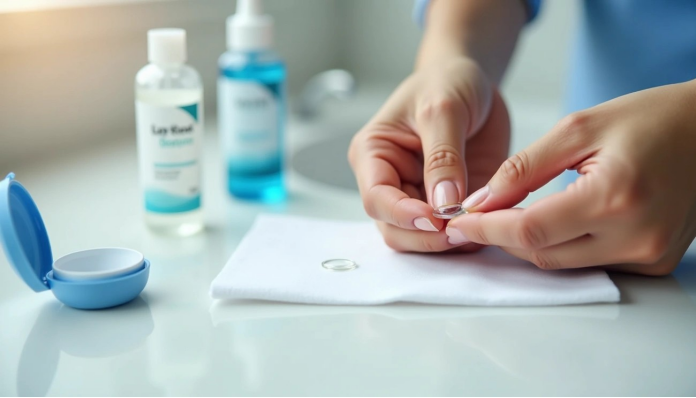
Why hand hygiene matters
Bacteria from your hands can easily transfer to your lenses and eyes. Research shows that poor handwashing before handling contacts makes microbial keratitis 4.5 times more likely . Some studies reveal an even more alarming rate—13 times higher risk . On top of that, it doesn't matter if you use daily disposable lenses. Good handwashing can cut the risk of moderate to severe microbial keratitis by 50% .
The biggest problem is that people don't follow these rules. Studies show that only 67-70% of contact lens users wash their hands before putting in their lenses . The numbers look worse for lens removal—only 50-59% bother to wash up . Dirty hands turn your fingers and lenses into germ carriers that can infect your eyes.
How to wash hands properly before handling lenses
Here's what you need to do for clean hands:
- Wet your hands with clean, running water (temperature doesn't affect effectiveness)
- Apply enough soap to cover all surfaces when lathered
- Rub hands together vigorously, paying special attention to fingertips and palms
- Continue scrubbing for 20-30 seconds (the entire process should take about one minute)
- Rinse thoroughly under clean running water until all soap is removed
- Dry completely with a clean, lint-free towel
Common mistakes to avoid
Contact lens users make critical mistakes that put their eye health at risk. People often reach for hand sanitizer instead of soap and water. While convenient, sanitizers contain alcohol that can taint lenses and hurt your eyes . Users tend to wash up before putting lenses in but skip washing before taking them out .
Other mistakes include rushing through the washing process, using damp hands, and touching other things between washing and handling lenses . Using water without soap makes hand cleaning nowhere near as effective . Your fingernails should stay short because bacteria love to hide under them where washing doesn't reach as well .
Clean and Disinfect Your Lenses the Right Way
Clean hands are essential, but your lenses also need proper cleaning to prevent serious eye infections.
Use the rub and rinse method
Research shows that rubbing and rinsing your lenses helps protect against eye infections . Eye care professionals recommend rubbing each lens with your fingers for 10 seconds, even with solutions labeled "no-rub" . This hands-on cleaning removes deposits and microorganisms from lens surfaces. You should rinse each lens with fresh solution for 5-10 seconds after rubbing, as the manufacturer specifies .
Choose the right cleaning solution
Contact lens care relies on two main types of solutions: multipurpose and hydrogen peroxide-based. Multipurpose solutions work as all-in-one systems that clean, rinse, and disinfect . Hydrogen peroxide solutions offer deeper cleaning and come without preservatives, which makes them great for people with sensitivities . You must neutralize hydrogen peroxide before wearing lenses to avoid serious eye discomfort .
Note that each lens type needs its own solution – soft lens solutions won't work for rigid gas permeable (RGP) lenses . On top of that, it's crucial to throw away solutions after they expire or within 90 days of opening .
Avoid topping off old solution
"Topping off" – adding fresh solution to old solution in your lens case – is a risky habit. This practice reduces the solution's disinfecting power by a lot . Research shows that all but one of these contact lens wearers do at least one thing that puts their eyes at risk . You should always use fresh solution and throw away the old solution when storing your lenses .
Never use water or saliva
Water and saliva should never touch your lenses. Tap water contains microorganisms like Acanthamoeba that stick to lenses and can cause severe infections, maybe even blindness . Your saliva has bacteria that can harm your eyes . Saline solution works for rinsing but should never replace proper cleaning and disinfection .
Store and Handle Lenses with Care
Taking care of your contacts goes beyond the lenses themselves. Your lens case protects your contacts but can turn into a bacteria hotspot if you don't maintain it well.
How to clean and dry your lens case
You need to empty the case and rinse it with fresh contact lens solution after putting in your lenses. Never use tap water . Here's a simple four-step process that will give you a clean case:
- Empty: Get rid of all old solution
- Rinse: Clean with fresh contact lens solution only
- Air-Dry: Turn the case upside down on a clean towel or tissue
- Store: Keep it in a clean, dry spot away from bathrooms
Let your case air dry without the caps to stop moisture from building up and bacteria from growing . On top of that, it's important not to scrub your lens case because many have antimicrobial silver coatings that can come off .
When to replace your lens case
Eye doctors all agree that you should replace your contact lens case at least every three months . You should throw away any case right away if it gets cracked, damaged, or discolored . A dirty case can increase your risk of infection by a lot and might lead to serious conditions like keratitis .
Safe storage practices for daily and occasional wearers
Daily wear users should always use fresh solution. Don't "top off" old solution as this makes it less effective at disinfecting . Part-time lens wearers face different challenges. Many multipurpose solutions can keep your lenses safe for up to a month in tightly closed cases if you wear them sometimes . But some solutions only work for 24 hours .
Hydrogen peroxide systems vary for longer storage - some work for seven days while others last just 24 hours . Daily disposable lenses ended up being the perfect solution for part-time wearers by removing these storage worries completely .
Know the Risks and Stay Compliant
Your sight depends on spotting contact lens warning signs early. These medical devices need proper care to avoid serious complications.
Signs of infection to watch for
You should act fast if you notice eye infection symptoms. Look out for:
- Eye redness and irritation
- Pain in and around the eyes
- Discharge or excessive tearing
- Blurred or decreased vision
- Light sensitivity
- A sensation of something stuck in your eye
Remove your lenses immediately if you notice these symptoms. They could signal a serious eye infection or corneal ulcer .
Why skipping steps can lead to serious problems
Your vision faces risks when you ignore proper contact lens care. The risk of infection multiplies by 8 times if you sleep with contacts . Water exposure lets harmful microorganisms cause severe infections . These issues can escalate quickly and lead to corneal ulcers, permanent vision damage, or in rare cases, blindness .
How to build good habits for long-term eye health
Your eyes stay healthy when you:
- Replace lenses on schedule
- Keep lenses away from water while swimming or showering
- Take out daily wear lenses before sleeping
- Show up at all eye exam appointments
Note that ill-fitting lenses can scratch your eye's surface and trigger blood vessel growth into your cornea .
When to see your eye doctor
Your cornea's shape changes over time and contact lenses can warp . You need medical help right away if you experience severe symptoms like eye pain, redness, or blurred vision . Without doubt, missing yearly exams puts you at risk of wearing the wrong prescription or unsuitable lenses .
Conclusion
Taking care of contact lenses demands dedication and attention to detail, and the payoff for your eye health is worth every effort. Clean hands provide the first line of defense against infections. You must clean your lenses with the right solutions. Your risk of complications drops by a lot when you replace lens cases regularly and store them properly.
Quick action becomes crucial when you spot warning signs of potential problems before they turn into serious threats to your vision. Care instructions might feel like a hassle sometimes, but taking shortcuts isn't worth risking infections that could damage your eyesight forever.
Contact lenses are medical devices that interact directly with your most vulnerable organs. Good habits you develop now will protect your vision throughout your life. Make sure to book regular check-ups with your eye doctor and stick to the replacement schedule for lenses and cases. Never let your contacts touch water or sleep while wearing daily lenses.
Your eyes need the best possible care. Clear vision goes beyond seeing well today—it's about keeping your sight sharp for life.