
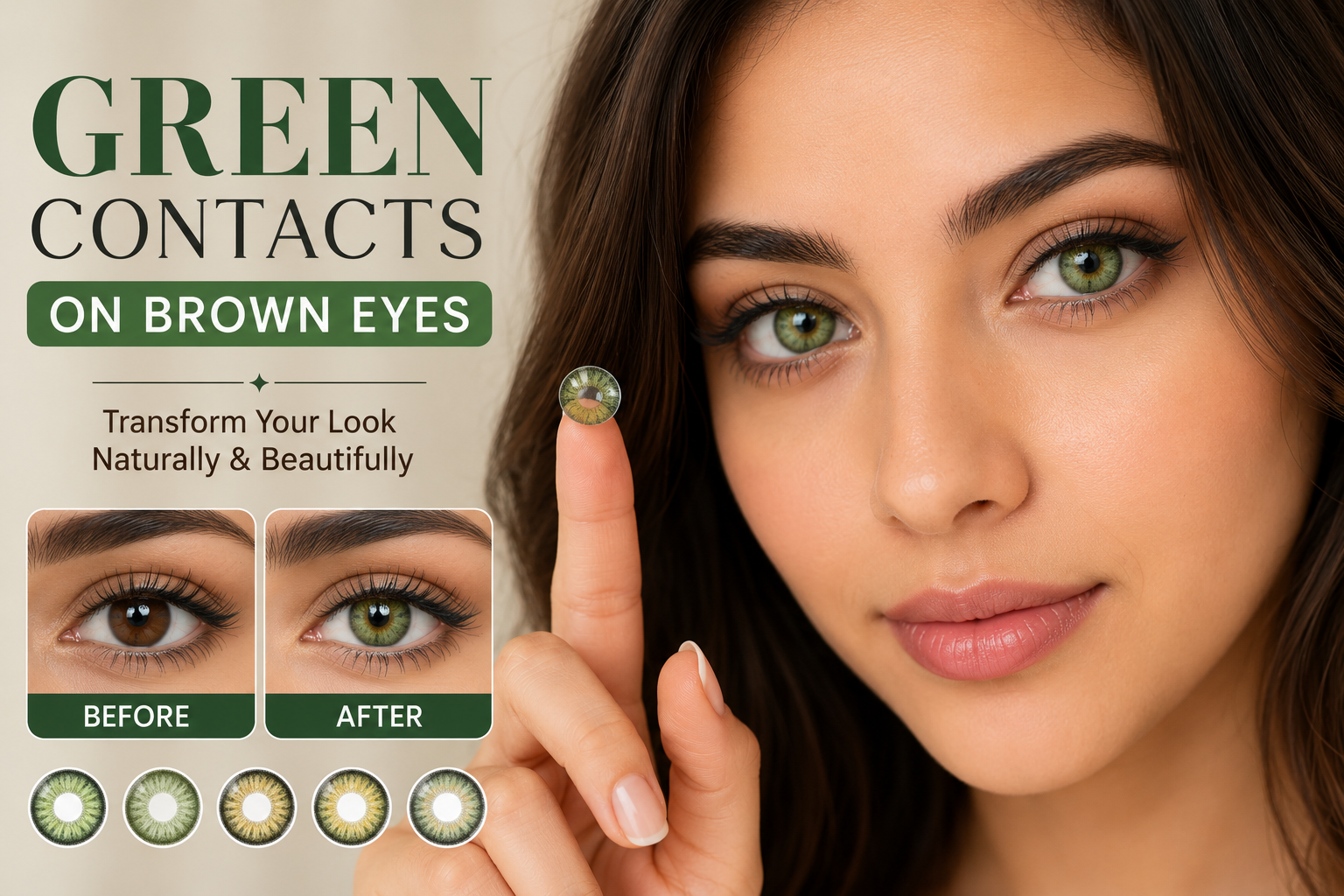
Green contacts on brown eyes can create one of the most beautiful eye transformations when the right shade and lens design are chosen. Brown eyes already have warmth and depth, so adding green can create anything from a subtle hazel effect to a bold emerald transformation.
The tricky part is choosing a shade that actually works with your natural eye color. A green lens that looks soft and natural on light brown eyes may appear completely different on deep brown eyes. I've found that the most realistic results usually come from lenses that don't rely on one flat shade of green. Instead, they combine several tones to create the look of a natural iris.
If you're thinking about trying green contacts on brown eyes, here's what you should know before choosing your next pair.
Why Green Contacts Look So Good on Brown Eyes
Brown and green are naturally compatible colors. Brown provides a warm base, while green introduces contrast without necessarily making the eyes look artificial.
That's one reason green contacts can be more forgiving than extremely bright blue or white lenses.
A well-designed green lens can create:
- A soft hazel appearance
- Olive-green eyes
- Deep forest-green tones
- Golden-green highlights
- A brighter emerald effect
The final result depends heavily on your natural eye color, lens opacity, pattern, and lighting.
Do Green Contacts Work on Dark Brown Eyes?
Yes, but the lens design matters.
Dark brown eyes contain more natural pigmentation, so a low-opacity green lens may not produce much visible change. Instead of looking green, it might simply add a slight tint to your existing eye color.
For a noticeable transformation, look for lenses with stronger coverage and detailed color patterns.
High-Opacity Green Lenses
High-opacity lenses are designed to cover more of the natural iris.
They're useful if you want:
- A clearly visible color change
- Emerald or forest-green eyes
- A stronger fashion look
- Better color visibility over very dark brown eyes
However, maximum opacity doesn't always mean maximum realism. A flat, solid green can sometimes look less natural than a multi-tone design.
Multi-Tone Green Lenses
Multi-tone lenses combine different shades across the iris.
For example, a lens may use darker green around the outside, lighter green toward the center, and hints of brown or gold near the pupil.
This creates more depth and can make the eye look much more realistic.
What Shade of Green Looks Most Natural on Brown Eyes?
There isn't one perfect green for everyone. Your natural eye color and the look you're trying to achieve both matter.
Olive Green
Olive green is one of the easiest shades to wear if you want a natural transformation.
Because olive contains yellow and brown undertones, it blends beautifully with naturally warm eyes.
It's a particularly good option for:
- Everyday makeup
- Minimal makeup looks
- Casual outfits
- Natural photography
Hazel Green
Hazel-green lenses are another excellent choice.
Rather than completely hiding the warmth of brown eyes, they combine green, brown, and sometimes golden tones.
The result can look like naturally hazel eyes rather than obviously colored contacts.
Forest Green
Forest green creates a deeper and more dramatic appearance.
It works especially well on dark brown eyes because the deeper shade doesn't look completely disconnected from the natural iris.
This is a good choice if you want noticeable green eyes without going for an extremely bright color.
Emerald Green
Emerald green is much more dramatic.
It's ideal when you want your eyes to become the main feature of your look. Emerald lenses can work beautifully for parties, photography, special occasions, cosplay, and creative makeup.
For everyday wear, however, a softer green may be easier to style.
How Your Natural Brown Eye Color Changes the Result
Brown isn't just one color. Some brown eyes are almost black, while others contain noticeable honey or golden undertones.
Dark Brown Eyes
If your eyes are very dark brown, green may initially appear deeper than expected.
Forest, olive, and emerald shades with stronger pigmentation generally show more clearly.
Medium Brown Eyes
Medium brown eyes provide more flexibility.
You can experiment with olive, hazel-green, emerald, or softer green shades depending on how dramatic you want the transformation to be.
Light Brown Eyes
Light brown eyes usually blend more easily with green lenses.
Softer and semi-transparent designs can produce a subtle, believable change, while opaque lenses can create a much stronger effect.
Why Lens Opacity Matters
Opacity is one of the most important things to consider when choosing colored contacts for brown eyes.
A transparent or lightly tinted lens allows some of your natural iris to remain visible. This can be useful when you're looking for enhancement rather than a complete transformation.
An opaque lens covers more of your natural color and produces a stronger result.
The key is balance.
If you want natural-looking green eyes, don't automatically choose the most opaque lens available. Look for a design that combines adequate coverage with a detailed iris pattern.
Iris Patterns Make a Big Difference
One thing I always notice when comparing colored contacts is the iris pattern.
Natural eyes aren't one perfectly uniform color. They contain tiny variations, radial lines, darker edges, and subtle color changes.
Modern colored lenses can imitate these details.
Inner Ring
The area around the pupil can use lighter or darker shades to create depth.
Middle Iris
This is usually where most of the green color appears.
Limbal Ring
A darker outer ring can define the iris and make the eyes appear more noticeable.
A well-balanced combination of these elements can make green contacts look much more realistic.
How Lighting Changes Green Contacts on Brown Eyes
Don't judge a lens based on one photo alone.
Lighting can dramatically change how green contacts appear.
In natural daylight, green shades often look brighter and more detailed. Under warm indoor lighting, they may appear darker or slightly more olive.
Flash photography can increase contrast and make the lens color look more intense.
This is completely normal.
If you're choosing lenses online, try to look for images taken under different lighting conditions rather than relying on one heavily edited photograph.
How to Make Green Contacts Look More Natural
If you're aiming for a realistic result, a few styling choices can help.
Match Your Makeup
Warm makeup can complement olive and hazel-green lenses beautifully.
Bronze, brown, champagne, and neutral shades can bring out the warmth in both your skin and eyes.
For emerald or cooler green lenses, neutral or slightly smoky makeup can create a stronger contrast.
Consider Your Hair Color
Hair color also influences how green lenses appear.
Dark hair can make bright green eyes stand out more dramatically, while lighter or warmer hair tones can soften olive and hazel-green shades.
Don't Ignore Lens Diameter
Diameter affects the overall appearance of the eye.
A larger lens can create a more noticeable, doll-like effect, while a smaller, more natural-looking diameter may blend better with your features.
If realism is your priority, consider the overall lens design rather than focusing only on color.
Green Contacts for Everyday Wear vs. Special Occasions
Your ideal lens can depend on when you plan to wear it.
For everyday use, olive and hazel-green shades are generally easier to style. They can add noticeable color without dominating your entire appearance.
For events, photoshoots, Halloween, or cosplay, brighter emerald and fantasy-inspired greens can create a much stronger transformation.
The best choice isn't necessarily the most dramatic one. It's the one that fits the situation.
What About Green Contacts for Cosplay?
Green lenses are especially popular in cosplay because many fictional characters have bright or unusual eye colors.
If you're recreating a character, accuracy may matter more than natural appearance. In that situation, a brighter, more opaque green can make sense.
If you're simply inspired by a character but want an everyday version of the look, consider a softer green or hazel-green design.
You can also explore TolyTolly's guide to green colored contact lenses for more information about choosing green shades based on natural eye color.
Safety and Comfort Should Come First
A beautiful eye color isn't worth compromising your eye health.
Colored contact lenses should be treated like real contact lenses, not simply fashion accessories.
Always:
- Wash and dry your hands before handling lenses.
- Follow the recommended wearing schedule.
- Use the appropriate contact lens solution.
- Never clean lenses with tap water.
- Don't share lenses with anyone.
- Replace lenses according to the manufacturer's instructions.
- Remove lenses if your eyes become painful, unusually red, or irritated.
If you need vision correction, make sure your lenses are properly prescribed and fitted by an eye care professional.
Common Mistakes to Avoid
Choosing Based Only on the Model Photo
A lens can look completely different depending on the model's natural eye color.
Always consider your own starting eye color.
Picking the Brightest Green
Bright doesn't automatically mean better.
If you want a natural appearance, a softer multi-tone green can be much more flattering than a flat neon shade.
Ignoring the Replacement Schedule
Different lenses have different replacement periods. Never continue wearing a lens simply because it still looks fine.
Follow the product instructions carefully.
Final Thoughts
Green contacts on brown eyes can create everything from a subtle hazel enhancement to a dramatic emerald transformation. The secret is choosing a shade and design that work with your natural pigmentation rather than fighting against it.
For a natural everyday appearance, olive and hazel-green lenses are excellent starting points. If you want something bolder, forest and emerald shades can give brown eyes a much more dramatic change.
Pay attention to opacity, iris patterns, diameter, lighting, and your overall styling. Most importantly, choose lenses responsibly and follow proper care instructions.
The right green contacts shouldn't simply make your eyes look a different color. They should make the entire look feel like it belongs to you.
Frequently Asked Questions
Do green contacts look good on brown eyes?
Yes. Green can complement the warmth of brown eyes particularly well. Olive, hazel-green, and forest shades often create a balanced appearance.
What green contacts look most natural on dark brown eyes?
Olive and hazel-green lenses with multi-tone patterns generally provide a softer, more realistic effect. Darker forest-green shades can also work well when you want more visible color.
Can light green contacts show on brown eyes?
They can, but the result depends on opacity. On very dark brown eyes, low-opacity light green lenses may appear muted. Higher-coverage designs provide stronger visibility.
Are green contacts suitable for everyday wear?
They can be, provided the lenses are appropriate for your eyes and you follow proper wearing and care instructions. Softer shades are often easier to style for everyday use.
Will green contacts completely cover brown eyes?
It depends on the lens. High-opacity designs can cover much of the natural brown pigmentation, while tinted or lower-opacity lenses allow some of the original eye color to show through.
Can I wear green contacts if I need prescription lenses?
Some colored lenses are available with vision correction, but the correct prescription and fit should be determined with an eye care professional.
Do green contacts look different in sunlight?
Yes. Natural daylight can make green pigments appear brighter and reveal more detail in the lens pattern. Indoor lighting may make the same lenses appear darker or warmer.
Which is better for a natural look: green or hazel-green contacts?
Hazel-green usually creates a softer transition because it combines green with brown or golden tones. Pure green can create a more noticeable color change.